최신 기사
-
오피니언
-
전국노동
-
오피니언
-
전국노동
-
지역소식
-
전국노동
-
전국노동
미국 대통령이 달러의 세계적 지배력에 도전하는 모든 국가에 높은 관세를 부과하겠다고 위협하는 가운데, 인도는 조용히 중국에 접근하고 있습니다. 두 나라가 협상력을 강화하려는 시도에 의해 부분적으로 주도된 이러한 발전은 지진 수준의 지정학적 변화를 예고할 수 있습니다.
홍콩 – 도널드 트럼프 미국 대통령 당선자는 백악관으로 돌아가기 몇 주 전에 브릭스 국가에 날카로운 경고를 내렸습니다. 그는 자신의 소셜 미디어 플랫폼인 Truth Social에 "다른 바보를 찾아라"라고 글을 올렸고, 달러의 세계적 지배력에 도전하려는 그룹의 9개 회원국에 100% 관세를 부과하겠다고 위협했습니다.
트럼프의 경고는 취임 첫날 캐나다와 멕시코에서 수입되는 상품에 25% 관세를 부과하겠다는 공약에 이어 나왔습니다. 트럼프의 보호무역주의의 주요 타깃인 중국은 10%의 추가 관세에 직면할 것으로 예상됩니다. 중국과 미국 간의 무역 전쟁이 격화되고 있는 상황에서 이는 전혀 놀라운 일이 아니지만, 트럼프는 BRICS의 창립 멤버이자 미국의 주요 동맹국 중 하나인 인도에 대한 분노를 표출하기도 했습니다.
지금까지 인도는 달러에 대한 의지를 재확인 함으로써 즉각적인 갈등을 피하는 데 성공했습니다. 그러나 그러한 정책의 불확실성은 인도 정부가 중국과 화해를 추진함으로써 조용히 위험을 회피한 많은 이유 중 하나입니다. 이는 지진 수준의 지정학적 변화를 예고할 수 있는 움직임입니다.
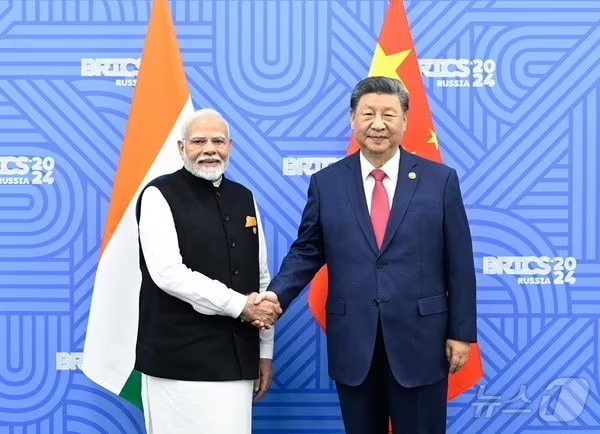
중국-인도 해빙 분위기는 최근 몇 달 동안 점점 더 분명해졌습니다. 10월에 두 나라는 히말라야 국경을 따라 수년간 지속된 군사적 대치를 종식시키기로 합의 했고, 러시아 카잔에서 열리는 BRICS 정상회담 도중에 인도 총리 나렌드라 모디와 중국 국가주석 시진핑이 별도의 깜짝 회동을 가질 수 있는 무대를 마련했습니다. 이러한 변화의 다른 신호는 인도 관리들이 중국 투자를 유치하는 데 새롭게 관심을 보이는 것입니다.
한편, 미-인도 관계는 냉각되고 있는 듯합니다. 8월에 있었던 대중 봉기로 방글라데시 총리 셰이크 하시나가 축출된 이후, 모디가 선호하는 뉴스 매체, 소셜 미디어, 힌두우월주의 동맹은 이 봉기를 CIA가 조종한 정권교체의 음모로 묘사했습니다. 일부는 " 미국 딥 스테이트 "가 인도를 불안정화하려는 유사한 시도를 경고하기도 했습니다.
모디의 집권 여당인 바라티야 자나타당은 이후 반미 감정을 수용하여 미국이 인도 정부를 약화시키려는 시도로 모디의 가까운 측근인 인도 재벌 가우탐 아다니를 미국 측에서 증권 사기와 뇌물 수수 혐의의 표적으로 삼았다고 비난했습니다. 수십 년간의 전략적 협력과는 완전히 다른 이러한 수사법은 명목상 비동맹 인도가 미국의 간섭을 경계하며 소련에 끌려갔던 냉전의 기억을 떠올리게 합니다.
이러한 변화는 여러 요인에 의해 주도되는데, 주로 미국의 글로벌 리더로서 행동하려는 능력과 의지가 약화되고, 중국과 인도가 협상력을 강화하려는 시도가 있습니다. 탈세계화가 세계 경제를 재편하면서, 미국은 방위를 위해 전적으로 미국에 의존하지 않는 인도와 같은 국가에 제공할 몫이 줄었습니다.
대조적으로, 글로벌 공급망에서 중국의 지배력은 무시할 수 없게 되었습니다. 세계 최대의 제조 강국인 중국은 다음 9대 제조업 국가들의 합 보다 더 많은 것을 생산하기 때문에, 인도가 자체 산업기반을 확장하려는 노력을 지원할 수 있습니다. 정부의 연례 경제조사는 이러한 필수성을 강조하면서 "인도 제조업을 촉진하고 인도를 글로벌 공급망에 연결하려면" 중국이 "중국의 공급망에 연결해야 한다"고 밝혔습니다. 이를 위해 보고서는 중국의 외국인 직접 투자 (FDI) 유치에 초점을 맞춘 실용적인 접근 방식을 옹호했습니다.
중국과의 협력에 대한 이처럼 명확한 인도정부 지원은 1962년 중국-인도 전쟁 이래 이웃과 적대 관계를 유지해 온 인도에서는 상상도 할 수 없는 일이었습니다. 2020년 인도 라다크 지역에서 국경 충돌로 인도군 20명이 사망한 후, 인도는 중국으로부터의 투자와 수입에 대한 광범위한 제한을 부과하고, 임원 비자를 제한하고, 중국 앱을 금지함으로써 대응했습니다. 하지만 이러한 조치는 중국 수입에 의존하는 인도 기업에 막대한 손실을 초래했습니다. 더욱 나쁜 것은 FDI 유입이 이미 감소하고 있던 시기에 중요한 중국의 인도 투자를 박탈했다는 것입니다.
글로벌 공급망이 중국에서 벗어나면서 중국 제조업체도 이전하고 있으며, 서구의 프렌드쇼링과 니어쇼링 전략의 혜택을 볼 수 있는 국가들에 기반을 구축하고 있습니다. 외국을 향한 중국의 직접 투자는 2023년에 전년 대비 3배 증가하여 1,600억 달러 에 달했으며, 이러한 흐름의 대부분은 베트남, 인도네시아, 헝가리, 세르비아와 같은 국가로 향했습니다. 실업률 증가와 높은 청년 실업률에 시달리는 인도는 이러한 추세를 활용하고자 합니다.
한때 FDI의 주요 공급원이었던 미국은 이제 국내 제조업을 촉진하기 위해 인도와 투자를 놓고 경쟁하고 있습니다. 트럼프 하에서 심화될 것으로 예상되는 이 경쟁으로 인해 인도는 여러 투자 제안을 승인하고 중국 기업과 임원에게 신속한 비자를 포함한 양보를 제공하게 되었습니다.
인도의 진로 수정은 중국의 이익과 긴밀히 일치합니다. 중국의 경기 침체로 인해 중국 기업들이 인도의 빠르게 성장하는 시장에 관심을 갖게 되었습니다. 인도는 향후 10년이 끝날 때까지 세계 3위의 경제 대국이 될 것으로 예상되며, 인도와 더 깊이 교류하면 중국이 지정학적 부상을 억제하려는 미국의 노력에 대한 주요 완충 장치를 제공할 수 있습니다.
게다가, 전 세계의 관심이 미국과 중국 간의 관세 전쟁이 격화되는데 집중되어 있는 동안, 인도는 자체적으로도 상당한 위험에 직면해 있습니다. 인도를 " 관세의 매우 큰 남용자 "라고 거듭해서 표현한 트럼프는 첫 임기 동안 인도의 특혜무역 지위를 철회했고, 이로 인해 추가적인 징벌 조치의 가능성이 높아졌습니다.
물론 미국이 " 주요 방위 파트너 "로 지정한 인도는 미국과의 전략적 관계를 포기하고 중국과 긴밀한 관계를 맺을 당장의 가능성은 낮습니다. 그러나 글로벌 사우스의 다른 신흥 강대국과 마찬가지로 인도는 미국이 주도하는 자유주의 국제질서, 특히 달러의 패권의 본질적인 비대칭성에 점점 더 좌절하고 있습니다.
이러한 마찰은 또한 인도의 소수자 대우에 대한 미국의 가끔씩 비난에 의해 촉진됩니다. 민주주의 기구들을 체계적으로 약화시키고 미디어에 대한 통제를 강화한 모디 정부는 국제적 비판에 화를 냅니다. 모디 정부는 다행스럽게도 이러한 차이점을 스스로 해결할 수 있습니다. 결국 트럼프가 인도의 러시아와의 관계, 반이슬람 정책 또는 민주주의의 후퇴에 대해 지나치게 우려한다고 상상하기는 어렵습니다.
그래도 모디가 인도를 힌두국가로 바꾸려는 노력을 강화함에 따라, 그는 대안이 있다는 신호를 보내 미국의 지지를 확보하고 싶어할지도 모릅니다. 그런 의미에서 인도가 중국에 접근한 것은 트럼프가 강경책을 쓰기로 결정하면 인도가 그에게 "다른 바보를 찾아라"고 말할 수 있도록 하는 지정학적 책략으로 볼 수 있습니다.
(저자 데바시시 로이 초우두리는 홍콩에 거주하는 인도출신의 저명 언론인으로 《To Kill A Democracy: India's Passage to Despotism》 (옥스퍼드 대학 출판부, 팬 맥밀란, 2021)을 존 킨과 공저했다.)
출처: PS. 2025년 1월 14일
[원문보기] As Trump Returns, Sino-Indian Relations Are Changing
PS. Jan 14, 2025
DEBASISH ROY CHOWDHURY
As the incoming US president threatens to impose steep tariffs on any country challenging the dollar’s global dominance, India has been quietly making overtures to China. This development, partly driven by both countries’ attempts to strengthen their bargaining position, could herald a seismic geopolitical shift.
HONG KONG – Weeks before his return to the White House, US President-elect Donald Trump issued a pointed warning to the BRICS countries. “Go find another sucker,” he wrote on his social media platform, Truth Social, threatening the group’s nine members with 100% tariffs should they attempt to challenge the dollar’s global dominance.
Trump’s warning came on the heels of his campaign promise to impose a 25% tariff on imported goods from Canada and Mexico on his first day in office. China, the primary target of Trump’s protectionism, is expected to face an additional 10% tariff. While this is hardly surprising, given the escalating trade war between China and the United States, Trump has also directed his ire at India, a founding member of the BRICS and one of America’s key allies.
So far, India has managed to avoid immediate conflict by reaffirming its commitment to the dollar. But such policy uncertainties are among the many reasons why the Indian government has been quietly hedging its bets by pursuing rapprochement with China – a move that could herald a seismic geopolitical shift.
The China-India thaw has become increasingly evident in recent months. In October, the two countries reached an agreement to end the years-long military standoff along their shared Himalayan border, setting the stage for a surprise meeting between Indian Prime Minister Narendra Modi and Chinese President Xi Jinping on the sidelines of the BRICS summit in Kazan, Russia. Another sign of this shift is Indian officials’ newfound interest in attracting Chinese investment.
Meanwhile, US-India relations appear to be cooling. Since a popular uprising ousted Bangladeshi Prime Minister Sheikh Hasina in August, Modi’s favored news outlets, social-media operatives, and Hindu supremacist allies have portrayed the insurrection as a CIA-orchestrated regime change. Some have even warned of similar attempts by the “American deep state” to destabilize India.
Modi’s ruling Bharatiya Janata Party has since embraced anti-American sentiment, accusing the US of targeting Indian tycoon Gautam Adani – a close ally of Modi charged with securities fraud and bribery in the US – in an effort to undermine the Indian government. Such rhetoric, a stark departure from decades of strategic cooperation, evokes memories of the Cold War, when a nominally nonaligned India, wary of US interference, gravitated toward the Soviet Union.
This shift is driven by several factors, primarily America’s diminishing ability and willingness to act as a global leader, along with China and India’s attempts to strengthen their bargaining position. With deglobalization reshaping the world economy, America has less to offer countries like India, which do not entirely rely on it for defense.
By contrast, China’s dominance in global supply chains has become impossible to ignore. As the world’s manufacturing superpower – producing more than the next nine largest manufacturers combined – China could support India’s efforts to expand its own industrial base. The government’s annual economic survey highlighted this imperative, stating that “to boost Indian manufacturing and plug India into the global supply chain,” the country must “plug itself into China’s supply chain.” To this end, the report advocated a pragmatic approach focused on attracting Chinese foreign direct investment (FDI).
Such unequivocal government support for cooperation with China was once unthinkable in India, which has maintained adversarial relations with its neighbor since the 1962 Sino-Indian War. After 20 Indian soldiers were killed in border clashes in India’s Ladakh region in 2020, India responded by imposing sweeping restrictions on investments and imports from China, limiting executive visas, and banning Chinese apps. But these measures resulted in massive losses for Indian businesses reliant on Chinese imports. Worse, they deprived India of critical Chinese investments at a time when FDI inflows were already declining.
As global supply chains shift away from China, Chinese manufacturers are also relocating, establishing bases in countries that stand to benefit from the West’s friendshoring and nearshoring strategies. Chinese investments in greenfield projects tripled year on year in 2023, to $160 billion, with much of these flows going to countries like Vietnam, Indonesia, Hungary, and Serbia. India, grappling with jobless growth and high youth unemployment, is eager to capitalize on this trend.
The US, once a major source of FDI, is now competing with India for investment as it seeks to boost domestic manufacturing. This competition, which is expected to intensify under Trump, has prompted India to approve several investment proposals and offer concessions – including expedited visas – to Chinese businesses and executives.
India’s course correction aligns closely with China’s interests, as the country’s economic slowdown has piqued Chinese firms’ interest in India’s rapidly growing market. India is projected to become the world’s third-largest economy by the end of this decade, and deeper engagement with it would provide China with a major buffer against US efforts to contain its geopolitical rise.
Moreover, while global attention remains focused on the escalating tariff war between the US and China, India faces significant risks of its own. Trump, who has repeatedly labeled India a “very big abuser of tariffs,” had revoked its preferential trade status during his first term, raising the likelihood of further punitive measures.
To be sure, India – designated by the US as a “Major Defense Partner” – is unlikely to abandon its strategic relationship with the US for closer ties with China. But like other emerging powers in the Global South, India is increasingly frustrated with the inherent asymmetry of the US-led liberal international order, particularly the dollar’s hegemony.
These frictions are also fueled by America’s occasional rebukes of India’s treatment of minorities. Having systematically weakened democratic institutions and tightened control over the media, Modi’s government bristles at any international criticism. Fortunately for Modi, such differences may resolve themselves. After all, it’s hard to imagine Trump being overly concerned by India’s ties to Russia, anti-Muslim policies, or democratic backsliding.
Still, as Modi steps up his efforts to transform India into a Hindu state, he may want to secure America’s support by signaling that he has alternatives. In that sense, India’s overtures to China could be viewed as a geopolitical maneuver aimed at enabling India to tell Trump to “go find another sucker” should he decide to play hardball.
DEBASISH ROY CHOWDHURY
Writing for PS since 2024
4 Commentaries
Debasish Roy Chowdhury is the co-author (with John Keane) of To Kill A Democracy: India’s Passage to Despotism (Oxford University Press, Pan Macmillan, 2021).
[울산함성 무료구독 신청] https://t.me/+ji13hLs-vL83ZTBl